Contemporary Italian Sculpture. Lucio Oliveri
Timeless beauty. Contemporary Italian sculpture has the power to move us and to make us reflect on the human condition. It is an art that reminds us that, for all our contradictions, human beings are capable of creating works that transcend time and space.

Written by
Published on


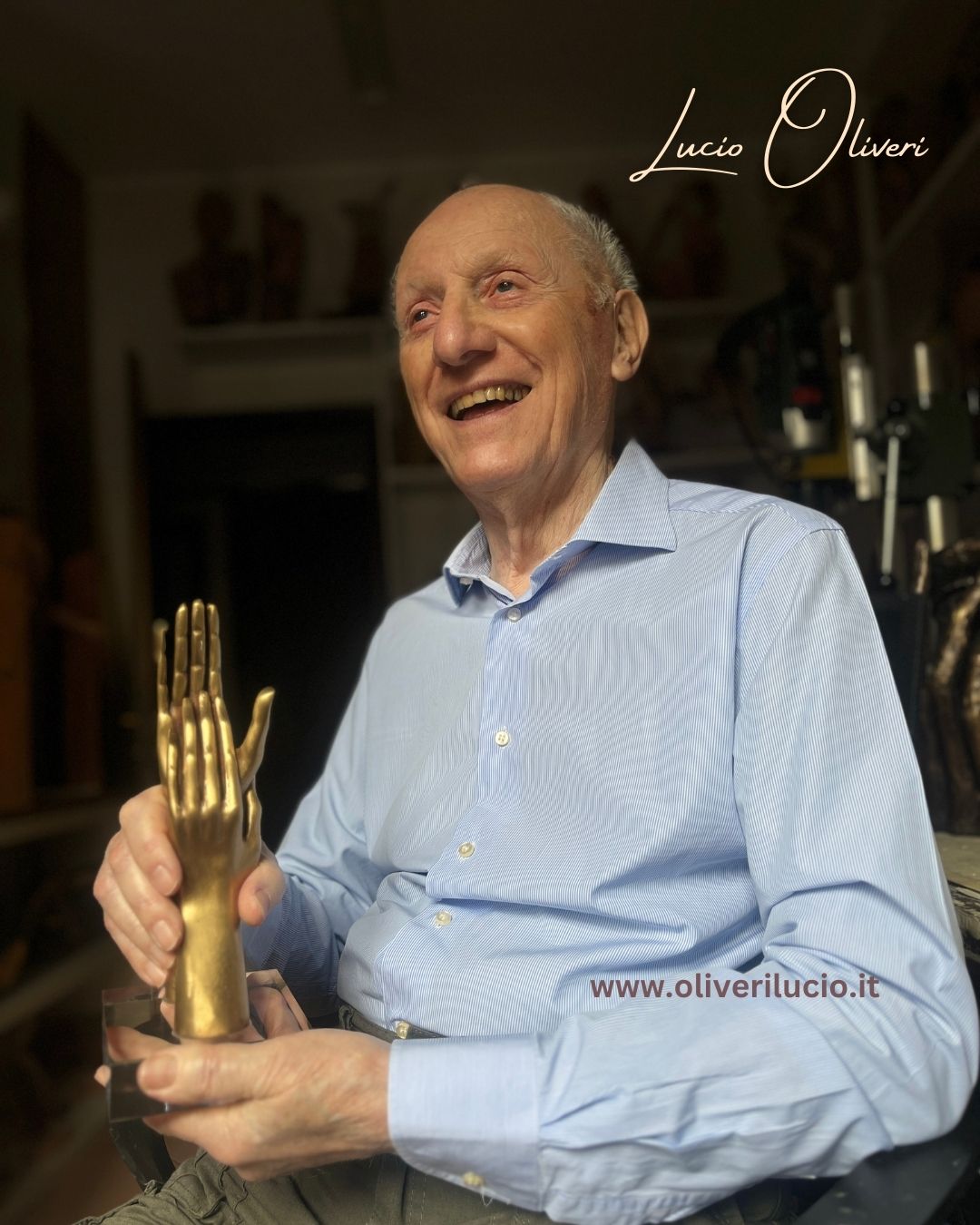


Contemporary Italian sculpture: a journey into creative genius
Italy, the homeland of artists such as Michelangelo, Bernini and Donatello, has always inspired the world with its extraordinary ability to create remarkable sculpture. Within the landscape of contemporary sculpture, Italian work remains unique for its originality, its expressive power and its ability to engage with today's society.
A strong bond with tradition
Although contemporary Italian sculpture stems from the Renaissance tradition, it does not merely repeat its rules. Modern and contemporary Italian artists have reinterpreted the classical language, combining technical mastery with the exploration of new materials, forms and concepts.
An art form that adapts to its time
Contemporary Italian sculpture is a powerful means of communication and social reflection, as well as an expression of beauty and refinement. Many artists have addressed contemporary themes such as war, immigration, cultural diversity and the human impact on the environment.
The challenge of modernity
Italian artists today must contend with a constantly changing society and with new technologies that are revolutionising the way art is made. Despite these challenges, Italian sculpture continues to shine, establishing itself as one of the most innovative and stimulating art forms on the international scene.
Lucio Oliveri, an outstanding example
Lucio Oliveri is one of the many Italian artists taking contemporary sculpture to ever higher levels. His works explore themes such as memory, identity and relationships, and are marked by a minimalist aesthetic and a strong conceptual component.
Continuous growth
It is not easy to predict how contemporary Italian sculpture, constantly evolving as it is, will change in the future. There is no doubt, however, that it will continue to surprise us with its inventiveness and its ability to interpret the problems and hopes of our society.